

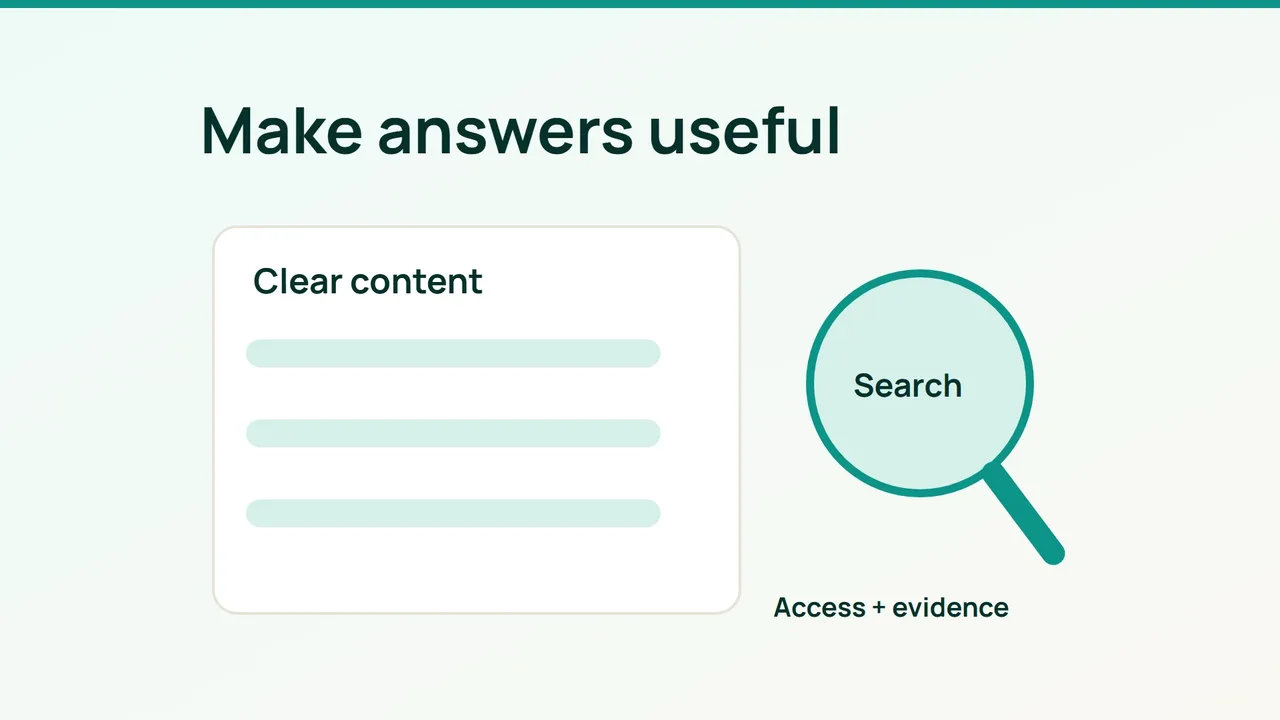
AI answers create another discovery path for WordPress content, but no plugin can promise a citation. Start with one useful page and test its editorial quality, rendered output and intended crawler access.
1. Build a page around a real question
Choose a question that customers actually ask. Give a concise answer first, followed by prerequisites, steps, a practical example and limitations. Include an identifiable author, meaningful revision date and supporting sources where appropriate.
For a backup restoration guide, describe what the backup contains and how readers confirm a successful restore. Do not produce near-identical pages for every wording of the same question.
Google says established SEO practices remain relevant to AI Overviews and AI Mode, without mandatory special optimization. That guidance is about Google Search. It does not establish how every Gemini or ChatGPT answer selects sources.
2. Make the visible page and metadata agree
Ensure important information is available as readable text with descriptive headings and useful internal links. In your WordPress SEO tool, select a Schema.org type that accurately describes the page, such as Article for editorial content.
This skeleton illustrates fields for a structured-data generator; it is not a complete block to paste into the post editor:
{ "@context": "https://schema.org", "@type": "Article", "headline": "Restore a WordPress backup", "author": { "@type": "Person", "name": "Actual author" }}Replace placeholders with real page information and validate the generated output. Check that the author and headline match what readers see. Avoid overlapping plugins that emit conflicting versions of the same entity.
A useful FAQ can answer follow-up questions without earning a special search display. Treat it as editorial work rather than a shortcut to AI placement.
3. Review access and define useful measurements
Check robots.txt, indexing directives, canonical URLs and WAF denials. These commands inspect the served policy and page headers:
curl --fail https://example.com/robots.txtcurl --head https://example.com/guide/OpenAI distinguishes OAI-SearchBot for search from GPTBot for model training. Decide on those uses separately. Preserve private-area restrictions instead of replacing the whole robots policy with a generic example. A claimed User-Agent alone does not authenticate a crawler.
For Google Search, use URL inspection to investigate indexing and snippet eligibility. Do not assume that those checks predict every Gemini response. ChatGPT, Gemini and AI Overviews are distinct products whose behavior should not be collapsed into one “AI ranking.”
Track a small set of pages and questions, referral visits and meaningful conversions. Keep dated observations, because answers vary with context. One screenshot is not evidence of durable visibility.
Common mistakes
Fabricated reviews, hidden structured-data claims and guaranteed-placement promises add risk without making the page more useful. A special file or a GEO label is not proof of selection.
FAQ and final checks
Does Schema.org guarantee inclusion? No.
Should private content be opened to crawlers? No. Authentication protects confidential areas; robots.txt is not access control.
Approve the page when the answer is useful, markup matches the text, intended public access works and success is measured without unsupported promises.
Sources: Google Search Central, OpenAI.