

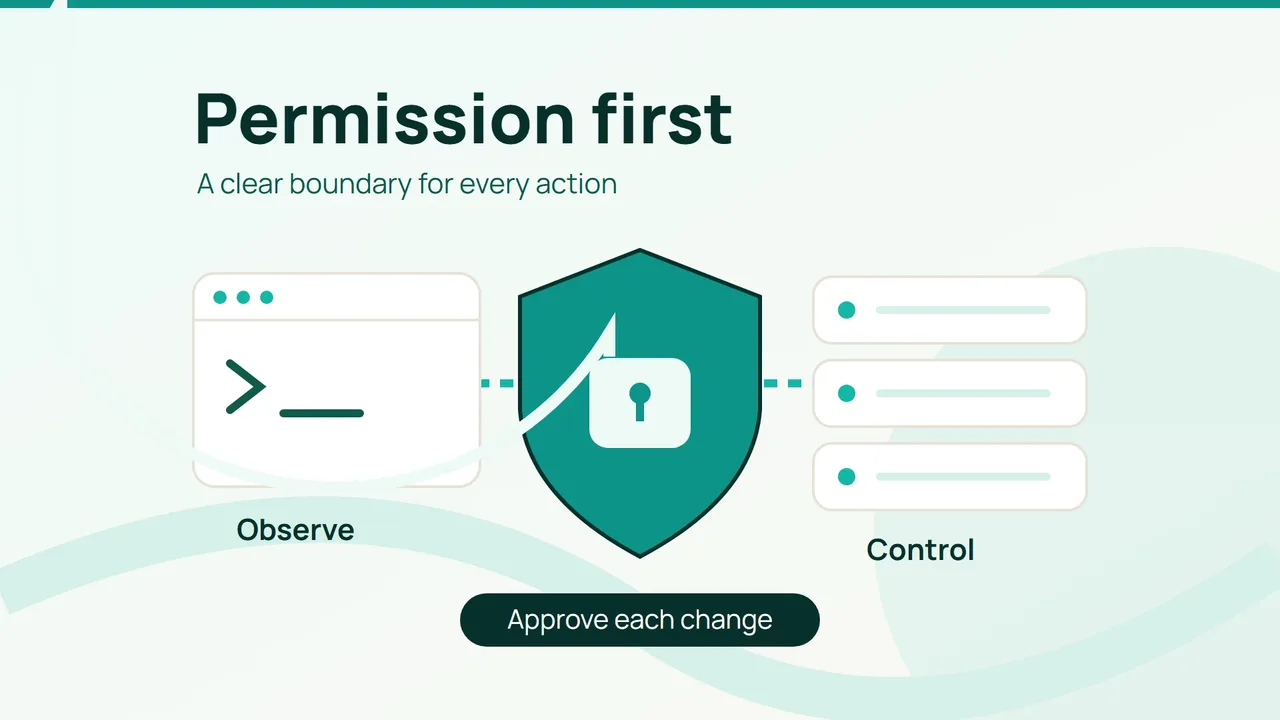
Vultr's September 17, 2026 announcement brings Cycle.io infrastructure operations within reach of MCP-compatible assistants. Before connecting one to a website environment, run a small trial that proves what it can access and how you can stop it.
1. Write a narrow trial brief
Start with a staging environment and one outcome: a service availability report using approved events and metrics. Record the environment identifier, the information needed and the person responsible for ending the trial. Keep customer records and credentials outside the diagnostic material.
Give the assistant a dedicated identity if the integration supports one. Inspect the effective permissions in the service that enforces them. A request to avoid changing production is useful context, but it does not remove production access from a credential.
Use this acceptance note as your starting point:
- Target: the named staging environment only.
- Output: a report with evidence and observation times.
- Changes: none during the initial diagnostic trial.
- Exit: a documented way to revoke the identity.
If the connection requires broader access than the task needs, use a disposable environment without real customer data. Do not treat the connector's name as evidence that its permissions are appropriate.
2. Inspect the route from reading to changing
According to Vultr, Cycle.io governs supported actions through its capability system and API key permissions. Review the exposed tools with that distinction in mind: fetching a metric and changing a deployment are separate capabilities.
Run the agreed diagnostic and compare its target with the control panel. Check prohibited operations through permission inspection or an officially supported simulation. Attempting an actual destructive operation is not a suitable access test.
Before a later trial permits changes, require a proposal stating the exact target, intended modification, expected effect and recovery procedure. Name the person who will review it. Approval for a service restart should not silently extend to changing DNS or moving a workload. Keep each trial small enough that the reviewer can understand its result.
3. Prove you can end the connection
For each allowed operation, retain its time, target, request identifier when available and observed outcome. Exclude credentials from this record. If a reply disappears, inspect the actual environment before repeating a request that could change it.
End the trial by revoking the dedicated access and confirming that the connection no longer works. Keep an administrator's independent access route available throughout. Record whether the report identified the right environment and whether any unexpected changes appeared.
The result should be a short operational record, not simply a successful conversation. Expand access only when the previous trial has demonstrated the intended boundary and a reliable way to withdraw it.
Sources: Vultr.