

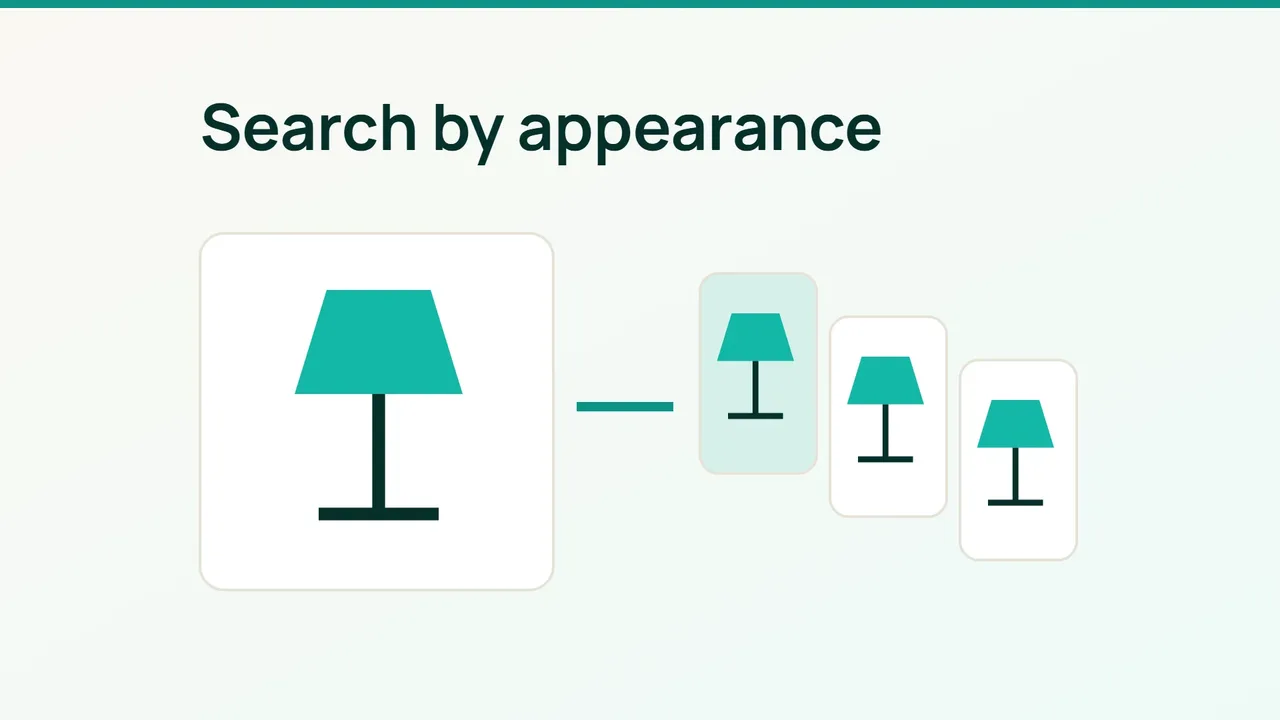
Akamai published an OpenCLIP-based visual retrieval experiment on September 24, 2026. For an online store, a useful next step is a controlled trial: can appearance-based retrieval find products that ordinary text search misses?
1. Build a reference set your team can judge
Select a manageable collection of product images you are authorized to use. Connect each image to a stable product ID, category and availability record. Keep evaluation images separate from the indexed collection where possible.
Write requests in which visual characteristics matter, such as a lamp’s shape, a cushion’s pattern or a bag’s outline. Have a person mark several acceptable matches for each request. Requiring the exact same photograph would measure duplication rather than whether the results help a shopper.
Include requests with no suitable product. Decide how the interface should handle them before testing. Returning the highest-ranked item is not automatically a useful answer when every available result is poor.
Keep the reference judgments fixed during the first comparison. Otherwise, changing the definition of success after seeing results can make either system appear better.
2. Compare against the existing search
Run your current text search on the same requests. For the visual prototype, use compatible image and query encoders. Equal vector dimensions alone do not mean two representations belong to the same learned space.
Record the model version and image preprocessing with the index. If either changes, check compatibility and rebuild embeddings where necessary rather than mixing representations without a test.
Use a worksheet such as:
request_id:text_top_5:visual_top_5:acceptable_results:unavailable_results:review_notes:Five results is a proposed trial setting, not a vendor performance claim. Where practical, show reviewers the two result sets without identifying the engine. Count useful matches separately from availability errors so an attractive but unavailable product does not hide an operational problem.
Record examples of failure, not just an average score. A search that works for lamps may still fail for visually similar spare parts.
3. Test the catalog connection before launch
Similarity scores do not establish stock, price or technical compatibility. Resolve those fields from your authoritative catalog after retrieval. Enforce access restrictions on the server before returning private product references or image locations.
Remove a test product and verify that it stops appearing within the update interval your team has defined. Repeat with a replaced image. A successful search over a static snapshot does not demonstrate a working update process.
Launch a limited pilot only if visual search improves the intended requests without an unacceptable increase in misleading results. If it does not, revisit image quality and evaluation criteria first. The outcome should be an evidence-based decision about your catalog, not a general claim that multimodal RAG is always better.
Sources: Akamai’s multimodal retrieval experiment.